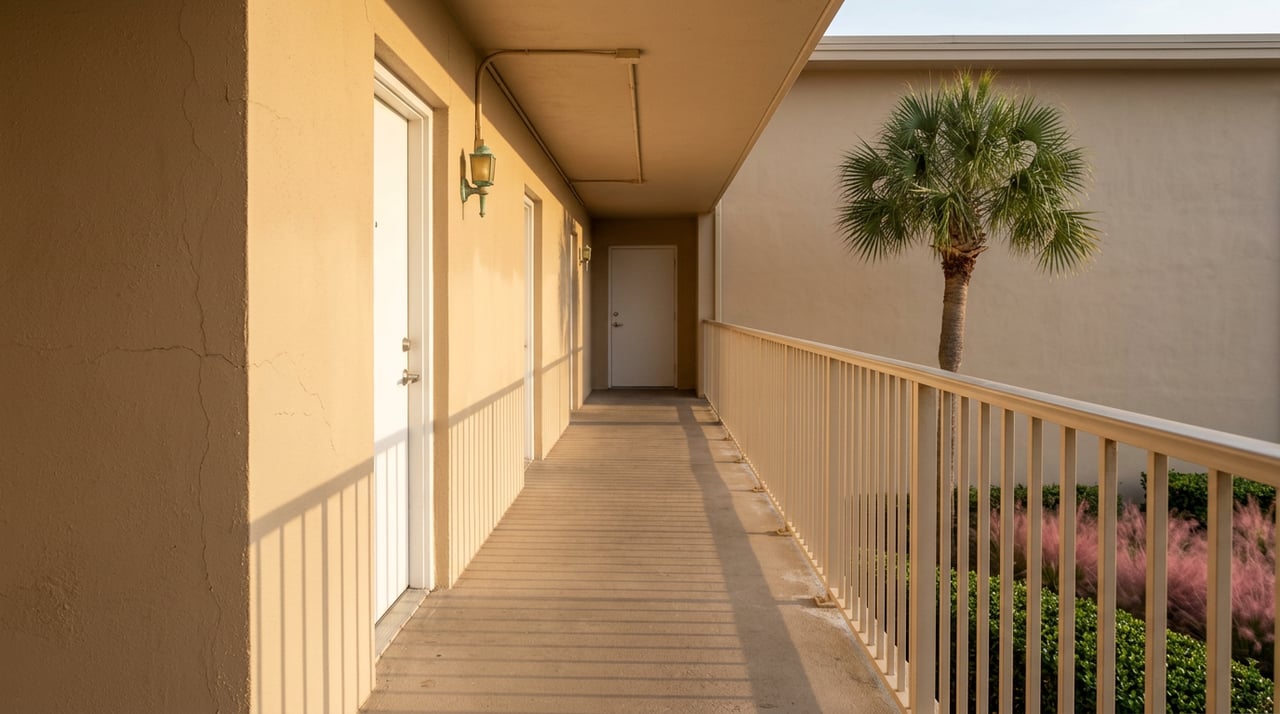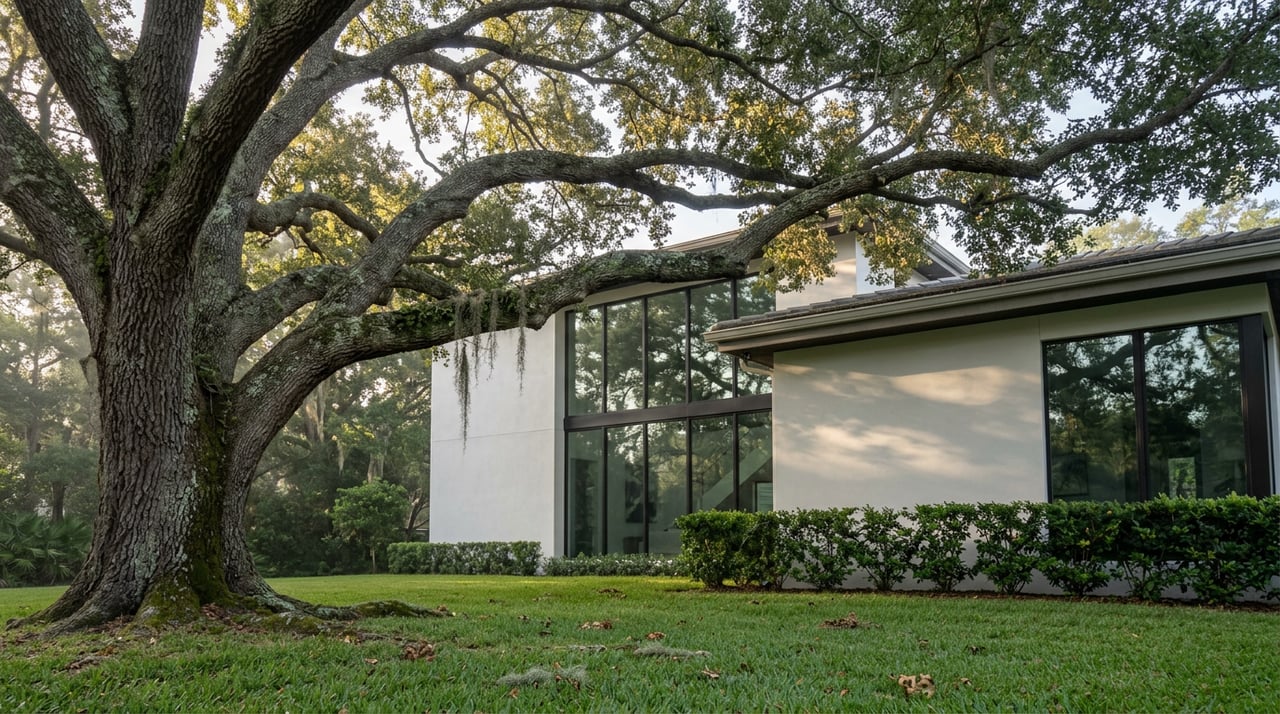
A buyer closing on a riverfront estate along Ormond Beach's John Anderson Drive is usually thinking about the water view, the dock, maybe the pool they want to add under that stand of grand old live oaks. What they are not usually thinking about is that the oaks themselves come with a layer of city authority attached. A historic waterfront property in the Ormond-by-the-Sea section of the corridor hit the market at $5 million on 1.6 acres in early 2025, the kind of listing that makes the case for John Anderson Drive as one of Ormond Beach's premier addresses. What that asking price doesn't show is that the same canopy making the lot valuable is legally protected, and removing it isn't purely the owner's call.
That's the thesis worth sitting with before you write an offer on this corridor: John Anderson Drive is not just a scenic street by reputation. It is a scenic street by ordinance, and that designation converts what feels like a landscaping decision into a permitting process with its own paperwork, its own reviewers, and in some cases its own public hearing.
The Street Is a Legal Designation, Not Just a Description
Ormond Beach's City Commission adopted Ordinance 2025-08 in early 2025, updating the landscape standards in the city's Land Development Code. Buried in that update is a section establishing "canopy road and scenic drive protection standards," with the stated purpose of preserving "the natural beauty and scenic vistas of and from" specific corridors. The ordinance names five scenic drives outright: a stretch of U.S. 1, all of Beach Street, all of Riverside Drive, the portion of Addison Drive within city limits, and all of John Anderson Drive.
That last one is easy to miss if you're reading a listing sheet instead of the city code. It means every parcel fronting John Anderson Drive, from the historic district near the river bend to the estate lots near Ormond-by-the-Sea, sits inside a corridor the city has committed to protecting visually. A separate but related list in the same ordinance designates specific "canopy road" segments nearby, including Riverside Drive from Granada Boulevard to Fluhart Street and stretches of North Beach Street and Center Street. John Anderson Drive itself isn't on that narrower canopy-road list, but the ordinance groups canopy road and scenic drive protections under the same purpose section, which means the same underlying tree protection standards apply to both.
What Counts as Protected, and Who Gets to Decide
The ordinance draws a distinction between ordinary trees, "specimen" trees, and "historic" trees, and the protections escalate at each tier. Historic trees carry the most restrictive rule: removal is not allowed without an approved development order or building permit already in place, and a certified arborist has to prepare a report on the tree's type, trunk diameter, and condition before the city will consider a removal request. For designated historic trees, the ordinance requires public notice of the hearing date at which the city commission will consider the removal, so a decision that a homeowner might expect to make privately can end up as an agenda item.
There's a documentation trap buried in the specimen tier too. If a tree gets removed and there's no record establishing its trunk diameter beforehand, the ordinance instructs the city to presume it was at least a 24-inch specimen tree, the larger and more protected classification, and puts the burden on the property owner to prove otherwise. In practice, that means a buyer who wants to clear a tree without first having it measured and documented is choosing the assumption least favorable to them.
The Mitigation Math Changes Depending on What You're Building
City staff discussed the mitigation formula at a Planning Board meeting in November 2024, and the numbers split in a way that matters for anyone buying a single-family home rather than a subdivision or commercial parcel.
| Project type | Mitigation standard discussed | What it means on the ground |
|---|---|---|
| Commercial, multifamily, or subdivision development | Roughly 30 percent, aligned with Volusia County's standard | Larger developments replace a substantial share of removed canopy, calculated across the site |
| Single-family lots (subdivisions excluded), when there's no practical alternative to removing a specimen tree | Replacement equivalent to about 15 percent of the tree's cross-sectional area | A homeowner clearing one specimen tree for a pool or addition faces a narrower, more specific replanting obligation than a developer would |
The good news for most John Anderson Drive buyers is that individual estate lots typically fall into that second, narrower category rather than the steeper standard applied to larger developments. The catch is that the lighter obligation only applies when there's genuinely no practical alternative to removing the tree, a determination the city, not the homeowner, ultimately signs off on.
If your renovation plan involves new construction directly adjacent to one of the specifically named canopy road segments, like that stretch of Riverside Drive between Granada and Fluhart, city staff have also discussed a planting requirement of one native shade tree every 50 feet along the right-of-way for new development. That's a separate obligation from tree removal mitigation, and it's the kind of detail a builder's site plan needs to account for before a shovel goes in the ground.
Where This Shows Up in Your Timeline
None of this shows up on a standard title search. It shows up when you submit for a building permit and the Building Division routes your project through Ormond Beach's tree removal review before your pool contractor, dock builder, or general contractor can pull the rest of their permits. Florida's new statewide $7,500 exemption for minor cosmetic residential repairs, which took effect July 1, 2026, doesn't help here either. That exemption applies to cosmetic building work like paint or minor finish repairs, not the land-clearing or tree removal tied to a specimen or historic tree, so it doesn't shortcut the review described above.
The practical effect is a sequencing problem more than a cost problem for most buyers. If your renovation depends on removing a large oak to make room for a pool deck, a garage addition, or dock access, budget time upfront for a certified arborist's report before your architect finalizes the site plan, not after.
What to Check Before You Close, Not After
A few steps during due diligence can keep this from becoming a surprise:
- Ask the seller whether any tree removal, trimming, or mitigation permits have been pulled on the property, and request copies. The city's Tyler EnerGov Civic Access portal lets anyone look up permit history by address, so this is verifiable before you sign anything.
- If your plans include removing any large tree, get it measured and photographed by a certified arborist before closing, so you're not relying on the city's default 24-inch presumption later.
- Confirm with the Building Division whether your specific parcel falls within one of the ordinance's canopy road segments in addition to the citywide scenic drive designation, since that can affect which planting or setback requirements apply to new construction.
- If the home is also on the city's Historic Landmarks list, loop in the Historic Landmark Preservation Board early. Ormond Beach's own preservation debates, including the years-long back and forth over the John Anderson Cabin on Orchard Lane before the city allowed its demolition, show how long these processes can run when a structure or its surrounding trees carry historic designation.
None of this makes John Anderson Drive a harder place to own. It makes it a corridor where the canopy is part of what you're buying and part of what the city has a say in, and knowing that before your offer is accepted beats finding out after your contractor's permit stalls.
Quick FAQ
Does the scenic drive designation apply to the whole length of John Anderson Drive, or just certain blocks? The ordinance designates all of John Anderson Drive as a scenic drive. The narrower canopy road list, which includes segments of Riverside Drive and North Beach Street, is a separate designation that doesn't currently include John Anderson Drive by name.
What if a protected tree is already dead or hazardous? The ordinance includes an exemption allowing immediate removal when a landscape architect determines a historic tree poses a clear and imminent hazard to public safety, without waiting for the standard hearing process.
Does any of this affect resale value? The ordinance itself doesn't set a value standard. What it does is add a documented, verifiable layer to a property's history, since tree removal and mitigation permits become part of the public permit record any future buyer, or their agent, can pull.
If you're evaluating a home on John Anderson Drive or anywhere else along Ormond Beach's protected corridors, this is exactly the kind of detail worth surfacing before you write an offer, not after your renovation plans hit a review you didn't budget for. Coastal Ventures Real Estate works this market street by street, and we're glad to walk through what a specific lot's canopy designation means for your plans. Schedule Your Relocation Consultation and let's look at the property together before you're under contract.