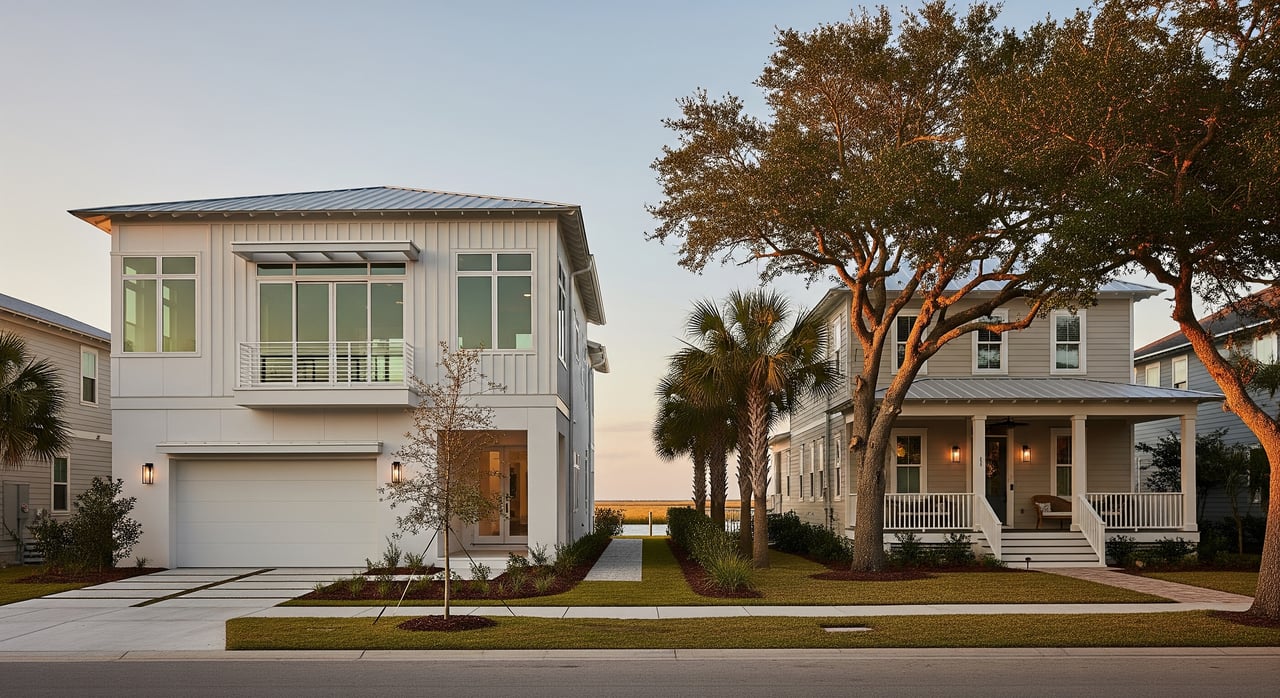
Thinking about a new-build versus a resale in Volusia, but not sure which path fits your timeline, budget, and lifestyle? You are not alone. Many buyers love the idea of modern features and warranties, while others prefer larger lots and established streets. In this guide, you will learn how each option stacks up on cost, timing, HOA and CDD fees, inspections, insurance, and more so you can buy with confidence in Ormond Beach, Daytona Beach, Port Orange and surrounding areas. Let’s dive in.
Volusia County housing at a glance
The area blends established neighborhoods from the 1970s–1990s with newer master-planned communities. Resale homes often come with larger lots and mature landscaping. Newer communities tend to offer modern floor plans, energy-efficient systems, and shared amenities.
Because our area sits near tidal waterways, flood exposure can vary even within the same street. Always verify a property’s specific flood zone using the FEMA Flood Map Service Center and review elevation certificates where available.
Build timelines versus move-in speed
If time matters, the difference is clear.
- New construction: Quick-move-in specs can sometimes deliver in 3 to 9 months. Semi-custom or custom builds often take 6 to 12 months or more. Timeline shifts can happen due to permitting, site work, material lead times, and inspection backlogs.
- Resale: You can usually close in 30 to 60 days, depending on financing and repairs.
What to verify with a builder:
- Ask for a written schedule with milestones for foundation, framing, mechanicals, and final inspection.
- Confirm whether the delivery date is guaranteed, subject to change, or tied to liquidated damages.
- Ask how permitting and utility hookups are handled in your city and Volusia County.
Warranties and post-closing protection
One reason buyers choose new construction is peace of mind.
- New construction often includes a layered warranty: 1-year limited workmanship, around 2 years on major systems, and up to 10 years of limited structural coverage. Coverage varies by builder and provider. Many builders use third-party programs like 2-10 Home Buyers Warranty.
- Resale homes do not include builder warranties. You can purchase an optional home warranty plan for systems and appliances, but coverage and claim procedures differ from builder-backed warranties.
What to verify:
- Get warranty documents in writing, including claim steps, response times, and exclusions.
- Confirm whether the warranty transfers and whether a transfer fee applies.
HOA and CDD costs you should model
Most newer communities have HOAs that manage common areas and amenities. Rules can affect exterior changes, parking, and rental restrictions. HOAs operate under Florida law, including Chapter 720 of the Florida Statutes.
Many master-planned communities in Florida also use Community Development Districts, or CDDs, to finance infrastructure. CDDs are special-purpose local governments created under Chapter 190, Florida Statutes. CDD assessments typically appear on your property tax bill and can run for years while bonds are repaid.
Why it matters:
- HOA dues and CDD assessments raise your monthly costs. Newer communities are more likely to include a CDD than older neighborhoods.
What to verify:
- Request HOA covenants, rules, and current budgets. Review meeting minutes to see if fee changes or special assessments are discussed.
- Confirm if the home is in a CDD, the current annual assessment, and the bond term.
Price premium and real value
New-build homes often carry a premium because of modern layouts, energy efficiency, and that “never-lived-in” appeal. The size of the premium varies by lot size and placement, finishes, community amenities, and builder incentives. In some areas, resales on larger, mature lots can command higher prices than smaller-lot new builds.
How to compare value:
- Look at price per finished square foot for recent comparable sales on similar lots.
- Add the value of included features, energy savings, and warranties for new construction.
- For resales, factor in the cost of any renovations you would need to reach your target finish level.
Inspections and code compliance
Florida’s building code sets high structural and energy standards for new construction. Local inspections must be passed before a Certificate of Occupancy is issued. Still, you should hire your own inspector.
- New construction: Order independent phase inspections and a final walk-through inspection to create a punch list before closing. Professional associations like InterNACHI outline best practices for these inspections.
- Resale: Budget for a general inspection and targeted specialists when needed, such as roof, HVAC, pool, termite, or septic.
What to verify:
- For new builds, request copies of permits, inspection logs, the final Certificate of Occupancy, and any engineering reports.
- For resales, review prior permits and receipts for completed work. Confirm that major repairs were permitted when required.
Insurance and flood risk
Flood risk depends on location, not the age of the home. Volusia County includes areas with higher-risk flood zones because of its proximity to the Halifax River and the coast.
What to do:
- Check a property’s flood zone in the FEMA Flood Map Service Center and ask for an elevation certificate.
- Get quotes for flood insurance early if the property sits in a high-risk zone. Newer homes built to stricter elevation standards may see more favorable premiums, but coverage needs are still zone-based.
Taxes, appraisals, and financing
Property taxes are set by assessed value and include county, city, school district, and any special assessments such as CDDs.
- Use the Volusia County Property Appraiser to review parcel data and assessed values.
- Check the Volusia County Tax Collector for current tax bills and special assessment details.
- Florida’s Homestead Exemption and the Save Our Homes cap can limit annual increases for qualifying primary residences; you must establish homestead after closing to benefit.
Appraisal and loan points:
- Quick-move-in new builds often appraise similarly to nearby resales. Highly upgraded specs may face appraisal gaps when comps lag.
- Construction-to-permanent loans for custom builds work differently than standard mortgages and can involve interest-only draws during construction.
Which option fits you best
You might prefer new construction if:
- You value modern layouts, energy-efficient systems, and builder warranties.
- You have flexibility to wait for construction and want turnkey finishes.
- You like amenities such as community pools, trails, or clubhouses.
You might prefer a resale if:
- You want a larger lot, mature landscaping, or a more established street grid.
- You need to move within 30 to 60 days.
- You plan to renovate selectively and want a location or lot size that is hard to find in new subdivisions.
A smart middle path:
- Consider a quick-move-in spec home for a shorter timeline.
- Target recently renovated resales to blend speed and a modern feel.
Buyer checklist
Use these quick checks to reduce surprises.
New construction checklist:
- Timeline: Written construction schedule with milestones and delay contingencies.
- Warranties: Full documents for 1-year workmanship, 2-year systems, and 10-year structural coverage; transfer rules and claim procedures.
- HOA/CDD: HOA budget, covenants, and design rules; CDD assessment amounts and bond terms.
- Permits: Copies of permits, inspection records, final Certificate of Occupancy, and elevation certificate if applicable.
- Lot details: Setbacks, drainage, grading, easements, and whether nearby lots will be developed.
- Upgrades: Written list of standard features, selected upgrades, final pricing, and change-order rules.
- Appraisal/financing: Lender approach to upgrades and comps; construction-to-permanent loan mechanics when relevant.
Resale checklist:
- Disclosures: Seller’s disclosure, permit history, and receipts for repairs or updates.
- Inspections: General inspection plus roof, HVAC, termite, pool, and septic if needed.
- Lot and setting: Lot size, tree conditions, drainage, and proximity to busy roads.
- HOA/CDD: Current financials, rules, and any known special assessments.
- Renovation budget: Contractor estimates to compare upgrade costs against new-build premiums.
How Coastal Ventures supports your decision
Choosing between new construction and resale is easier with a local advisor who understands this area street by street. Coastal Ventures Real Estate pairs concierge service with practical, financially minded guidance so you can act quickly and avoid costly missteps. If you are relocating for a new hospital role or fellowship, our MD Match program, private tours, and lender introductions help you align housing with your schedule and compensation timeline.
From flood-zone checks and HOA or CDD reviews to builder warranty vetting and inspection coordination, we handle the details so you can stay focused on your work and family. Ready to compare real options on the ground and move with clarity? Connect with Coastal Ventures to schedule your relocation consultation.
FAQs
Should I get an inspection on a brand-new home?
- Yes, order independent phase inspections and a final inspection to create a punch list before your warranty clocks start.
How common are CDD assessments in newer communities?
- CDDs are common in Florida master-planned neighborhoods, so confirm at the parcel level and review the annual assessment and bond term.
Do new homes cost more than resales?
- Often, but the premium varies by lot size, finishes, amenities, and incentives; compare price per square foot and factor in energy savings and warranties.
Will I need flood insurance near the Halifax River or coast?
- If the property lies in a high-risk FEMA flood zone, lenders will usually require flood insurance; always check the specific parcel’s zone and elevation.
Can I negotiate with a local builder?
- Yes, builders may offer closing cost credits, upgrades, or price adjustments based on inventory and market conditions; evaluate the total package versus resale options.